
Table of Contents
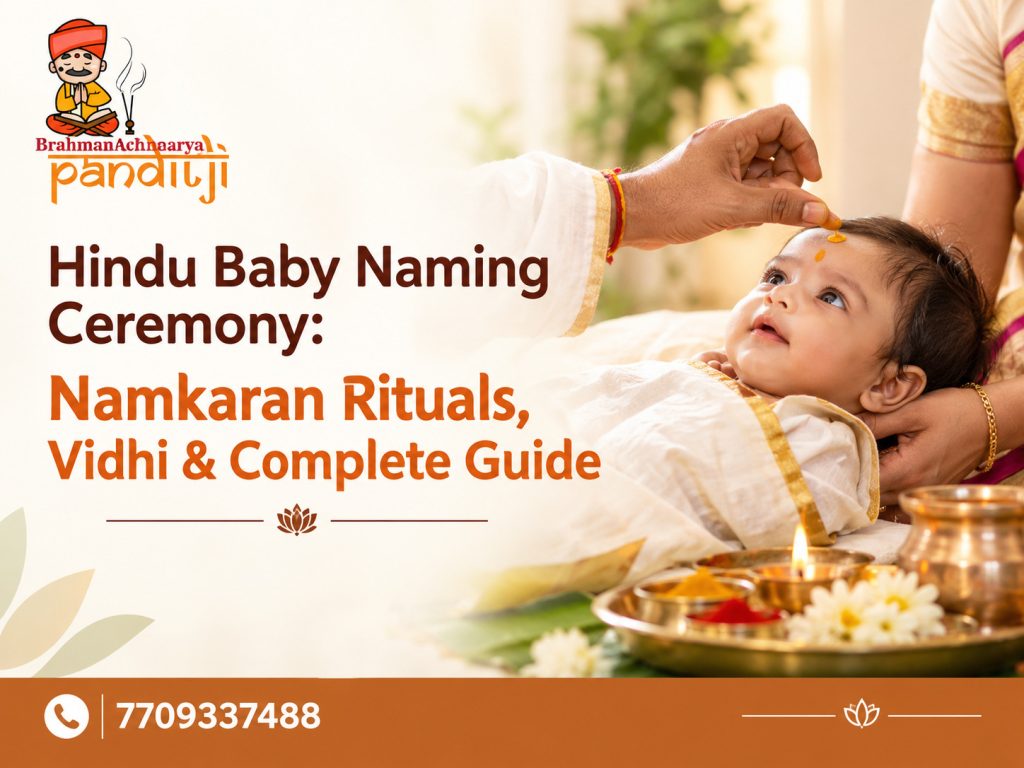
Namkaran ceremony the birth of a baby is a beautiful moment for every family. In Hindu tradition, giving a newborn a name is also considered an important occasion. The traditional Hindu baby naming ceremony is known as Namkaran Sanskar.
Namkaran is more than simply announcing a baby’s name. It is a ceremony where parents and family members come together to pray for the child’s health, happiness, long life and future. In many families, the baby’s birth Nakshatra and Rashi are also considered while selecting the name.
The customs may vary between families and regions, but the purpose remains the same: to welcome the newborn and formally give the child a meaningful name.
What Is Namkaran Sanskar or ?
Namkaran Sanskar is the traditional Hindu ceremony of formally naming a newborn. It is traditionally included among the Shodasha Samskaras, or sixteen important rites of passage.
The ceremony may include Sankalp, Ganesh Puja, Kalash Sthapana, prayers, the formal naming of the baby and blessings from elders.
Traditionally, the baby’s birth details are used to identify the Janma Nakshatra and Rashi. These can help determine suitable starting sounds for the baby’s name.
Families looking for authentic guidance can explore our traditional Hindu rituals and ceremony services.
When Is the Namkaran Ceremony Performed?
The timing of Namkaran varies according to family customs and regional traditions. In many Hindu families, the ceremony is traditionally held on the 11th or 12th day after birth.
If an early ceremony is not possible, families may select another suitable date. Some traditions also observe Namkaran around the 101st day or at another auspicious time during the baby’s first year.
The mother and baby’s health and comfort should also be considered when planning the ceremony.
How Is the Namkaran Muhurat Selected?
The auspicious date and time are generally selected with the help of a priest or astrologer. The baby’s birth date, exact birth time and place may be considered along with the Panchang.
Factors such as Tithi, weekday, Nakshatra, Rashi and planetary positions may be checked before finalising the Muhurat.
Since every baby’s birth details are different, there is no single Namkaran date that is suitable for every family.
How Is the Baby’s Name Chosen?
One traditional method of selecting a Hindu baby’s name is through the birth Nakshatra.
Each Nakshatra has traditionally associated sounds or syllables. The baby’s Pada may further help identify the preferred starting sound.
Parents can then choose a name that matches the recommended sound while also considering its meaning, pronunciation, family traditions and personal preferences.
Many modern families combine traditional Nakshatra guidance with contemporary names.
Namkaran Ceremony Vidhi
The exact rituals may differ according to the family’s customs and the priest’s guidance. A traditional ceremony can include the following steps.
1. Prepare the Puja Area
A clean and peaceful place is prepared for the ceremony. The puja chowki may be decorated with flowers and a suitable cloth, while all required Samagri is arranged beforehand.
2. Perform Sankalp
The parents make a Sankalp, stating their intention to perform the naming ceremony and seek blessings for the newborn. Relevant family and birth details may also be included.
3. Ganesh Puja
Lord Ganesha is worshipped before the main ceremony. Flowers, Roli, Akshat and other offerings may be used while prayers are recited for an obstacle-free ceremony.
4. Kalash Sthapana
A Kalash is prepared with water or Gangajal and may be decorated with mango leaves and a coconut. It represents purity and auspiciousness during the puja.
5. Navagraha Prayers
Some families include Navagraha Puja as part of the Namkaran. Prayers and offerings are made while seeking favourable blessings for the child’s future.
6. Jatakarma, If Required
If certain traditional birth rituals were not performed immediately after delivery, the relevant part may be completed according to family customs.
Because newborns have specific feeding and safety needs, parents should not give honey, ghee or any other substance to the baby without appropriate medical guidance.
7. Give the Baby Their Name
The most important part of the ceremony is formally giving the baby their name. Traditionally, the father may gently hold the baby and whisper the selected name into the child’s right ear.
The name is then announced to the family members present at the ceremony.
8. Aarti and Blessings
Aarti may be performed after the naming ritual. Grandparents and other elders bless the baby and express their wishes for a healthy and happy life.
9. Prasad and Celebration
The ceremony usually concludes with Prasad and family celebrations. Sweets, fruits, Mishri or Panchmeva may be shared according to the family’s tradition.
Namkaran Puja Samagri List
The required Samagri depends on the type of Vidhi being performed. A basic list may include:
- Kalash and coconut
- Mango leaves
- Gangajal
- Roli or Kumkum
- Akshat
- Chandan
- Flowers
- Mauli or Kalawa
- Diya and Ghee
- Kapoor
- Fruits
- Sweets or Mishri
- Panchmeva
- Puja cloth
It is best to confirm the final list with the priest before purchasing the items.
Can Namkaran Be Performed at Home?
Yes, many families choose to perform Namkaran at home. It can be a comfortable option for a newborn and allows close family members to participate in the ceremony.
The ceremony can be simple or include a detailed traditional puja, depending on the family’s preference.
Parents should keep the environment clean, peaceful and comfortable for both the mother and baby.
Our approach combines traditional knowledge with practical guidance to help families conduct meaningful Hindu ceremonies with confidence.
How Can Parents Prepare for Namkaran?
A little preparation can make the ceremony easier for new parents. Before the ceremony, it is helpful to:
- Shortlist a few meaningful names
- Check the baby’s Nakshatra and Rashi
- Confirm the recommended starting sound
- Finalise the Muhurat
- Arrange the required Samagri
- Prepare the baby’s clothes
- Keep feeding and resting arrangements ready
- Maintain a clean and comfortable ceremony space
There is no need to make the ceremony unnecessarily complicated. A simple and meaningful Namkaran can be equally special.
Namkaran and Modern Baby Naming Celebrations
Today, families celebrate baby naming in different ways. Some follow the complete traditional Vidhi, while others perform a shorter puja followed by a gathering with relatives and friends.
A modern naming party mainly focuses on celebrating and announcing the baby’s name. Traditional Namkaran, however, includes religious rituals and prayers along with the naming process.
Families can choose an approach that respects their traditions while also making the occasion comfortable and enjoyable.
Frequently Asked Questions
Is Namkaran always performed on the 11th or 12th day?
No. Although these days are traditionally followed by many families, the timing can vary. Another suitable date may be selected according to family customs and the baby’s birth details.
Does Nakshatra decide the baby’s name?
Nakshatra can be used to identify traditional starting sounds for the baby’s name. Parents can then choose a meaningful name based on those sounds.
Can a modern name be used for Namkaran?
Yes. Parents can choose a modern name while following the traditional Nakshatra-based starting sound if they wish.
Can Namkaran be done without a priest?
A simple family ceremony can be performed at home. For a detailed traditional Vidhi, many families prefer guidance from a knowledgeable priest.
What if Namkaran is delayed?
The ceremony can generally be performed later when circumstances are suitable. Families can consult their priest to choose an appropriate date and time.
A Beautiful Beginning for Your Baby
Namkaran is a special tradition that brings family, prayer and celebration together to welcome a newborn. From selecting a meaningful name to performing the puja and receiving blessings from elders, the ceremony creates a memorable beginning for the child’s journey.
Whether you prefer a simple home ceremony or a detailed traditional Vidhi, planning the important details in advance can help make the occasion peaceful and meaningful.
Families who need help planning their Namkaran can get in touch to discuss their ceremony requirements and traditions.