
Table of Contents
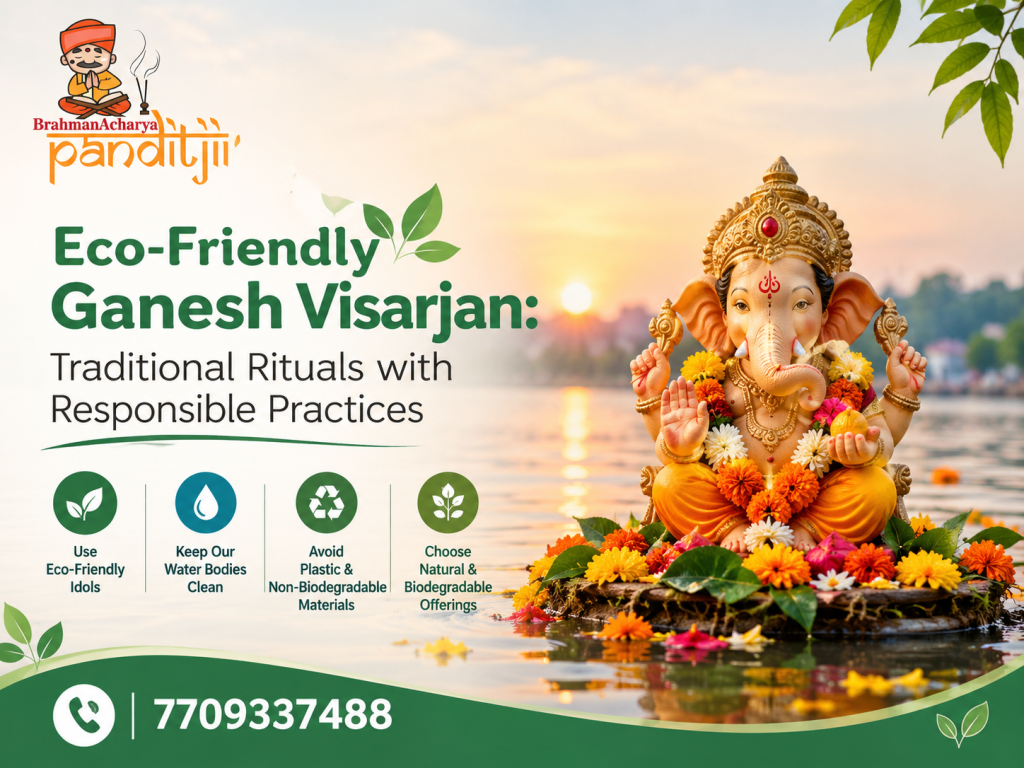
Eco-friendly Ganesh visarjan is the practice of immersing a Ganesh idol in a way that keeps the ritual intact while limiting harm to rivers, lakes and ponds. It generally means choosing a clay idol, natural dyes and an artificial immersion tank over plaster of Paris, chemical paints and single-use plastic decorations. Families who make these choices keep every step of the ritual the same, from the aarti to the final immersion, while reducing what actually enters a water body afterwards.
What Makes a Ganesh Visarjan Eco-Friendly?
An eco-friendly visarjan changes the materials used before and during the ritual, not the ritual itself. The idol is made from clay or shadu mitti instead of plaster of Paris, which dissolves fully in water within hours instead of settling as debris for weeks. Colours come from natural sources such as turmeric, multani mitti and vegetable dyes instead of synthetic paints that carry heavy metals. Decorations use flowers, paper and cloth instead of thermocol and plastic, so nothing but biodegradable material enters the water. Good shadu mitti idols sell out early, so most families start their festival planning well in advance.
Why Does a Traditional Visarjan Sometimes Harm Water Bodies?
A plaster of Paris idol does not dissolve the way a clay idol does, so it often settles at the bottom of a lake or river and stays there for months. Chemical paints used on these idols contain heavy metals that leach into the water and affect fish and other aquatic life over time. Decorative items such as thermocol, plastic flowers and synthetic garlands add further waste that does not break down naturally, which is why many municipal bodies now run idol collection drives right after the festival.
Which Materials Keep eco-friendly Ganesh visarjan and Traditional?
Every material below replaces a conventional choice without changing a single step of the puja itself.
- Clay or shadu mitti idols dissolve fully in water and match the traditional idol-making process used for generations.
- Natural dyes such as turmeric, indigo and multani mitti colour the idol without introducing chemicals into the water.
- Flower and paper decorations replace thermocol and plastic without changing how the mandap is set up.
- A home bucket or an artificial immersion tank replaces a river or lake for the final visarjan step.
- Biodegradable or paper flags and torans replace plastic bunting for the procession.
How Can Families Perform eco-friendly Ganesh visarjan at Home
Most of the shift from a traditional to an eco-friendly visarjan happens at the planning stage, well before the immersion itself.
- Choosing a clay idol at the time of purchase avoids the plaster of Paris question entirely.
- Immersing the idol in a large bucket or tub at home lets the family complete the ritual fully, and the resulting clay water can go directly into a garden or potted plants.
- Dropping the idol at a community collection point or municipal artificial tank works well for families without space for a home immersion.
- Choosing flower garlands over plastic ones removes the single largest source of plastic waste from a typical visarjan procession.
What Do Communities and Local Bodies Do to Support Eco-Friendly Visarjan?
Most cities now set up artificial immersion tanks and idol collection points specifically so families do not need to visit a natural water body at all. Many temples and community groups also organise clay idol workshops in the weeks before the festival, teaching families to model their own idol instead of buying a plaster of Paris one. Some families prefer to have a priest guide the entire ritual, from idol selection to the final immersion, and booking a puja service built around these eco-friendly choices is often how that gets arranged.
Do Rituals and Puja Priests Support Eco-Friendly Visarjan Practices?
Many puja priests and ritual specialists support an eco-friendly visarjan, since the shift changes only the idol’s material and the immersion site, not the mantras, the aarti or the sequence of the puja. Families who are unsure which materials keep a specific tradition intact often check with the priest performing their puja before the festival, since regional customs vary. Our team works with priests and families each year to plan a visarjan that keeps tradition and responsibility together.
Frequently Asked Questions
Is a clay Ganesh idol as auspicious as a plaster of Paris idol?
A clay idol is generally considered at least as auspicious as a plaster of Paris one, since clay is the traditional material used for idol-making before plaster of Paris became common. Many families and priests treat a clay idol as closer to the original tradition rather than a departure from it.
Can Ganesh visarjan be done at home without visiting a river or lake?
Yes, a Ganesh visarjan can be completed at home in a large bucket or tub, and the ritual itself stays exactly the same. The resulting clay and water mixture can then be used in a garden or for potted plants instead of being discarded.
What natural colours are safe for a Ganesh idol?
Turmeric, multani mitti, indigo and other vegetable-based dyes are commonly used as safe, natural alternatives to synthetic paint on a Ganesh idol. These colours wash away without leaving behind the heavy metals found in many chemical paints.
Does an eco-friendly visarjan change the ritual itself?
No, an eco-friendly visarjan only changes the idol material, the colours and the immersion site, while the aarti, mantras and sequence of the puja stay the same. Families keep the full ritual intact while reducing what enters a water body afterwards.
How is the water from a home idol immersion reused safely?
Water from a clay idol immersion is generally safe to pour directly into a garden or onto potted plants, since clay and natural dyes break down without leaving harmful residue. This is one of the main advantages of choosing a clay idol over a plaster of Paris one for a home visarjan.
Conclusion
An eco-friendly Ganesh visarjan keeps every part of the ritual the same while limiting what actually reaches a river, lake or pond afterwards. Choosing a clay idol, natural dyes and a home or community immersion point covers most of the shift, without asking a family to change how they observe the festival. Communities that pair these choices with collection drives and clay idol workshops tend to see the biggest drop in plastic and chemical waste each year. Families planning a community immersion this year can get in touch with us for guidance on collection points near them.