
Table of Contents
Planning a Mundan ceremony for your child? Many Hindu families have questions about the right age for Mundan Sanskar, auspicious dates, puja samagri, traditional rituals, and how to organise the ceremony. Understanding these details can help you follow your family customs and prepare for the occasion without last-minute confusion.
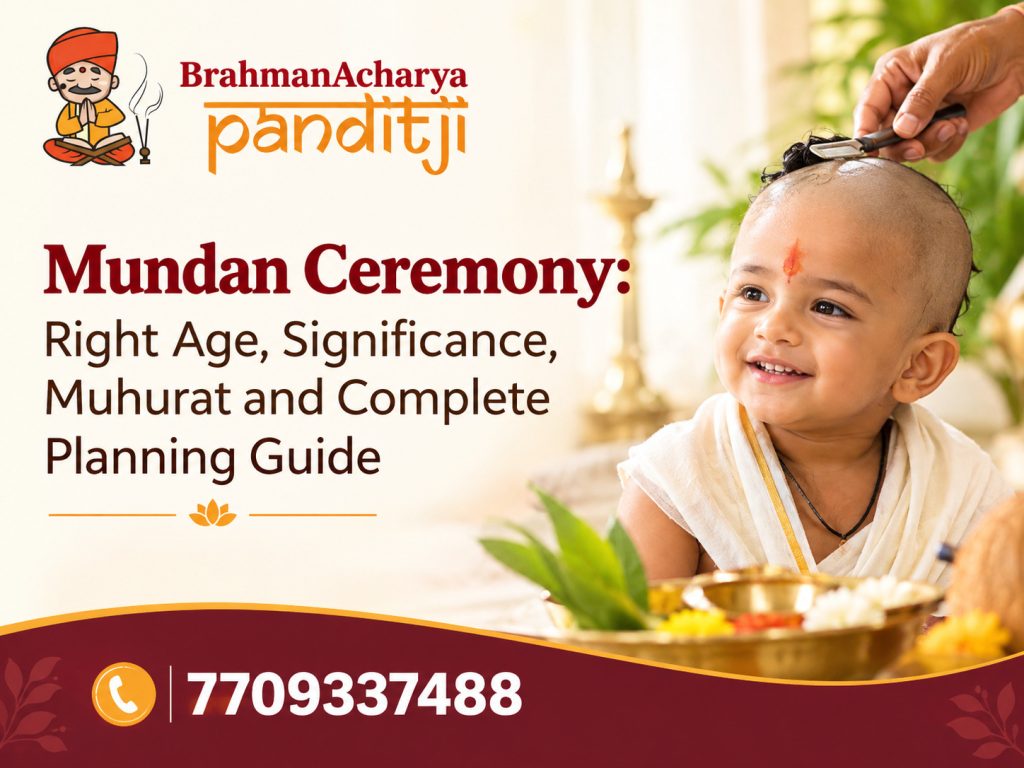
Mundan Sanskar, also known as Chudakarana, is a traditional Hindu rite of passage in which a child’s hair is ceremonially cut or shaved for the first time. Families perform this ritual to mark an important stage of childhood and seek blessings for the child’s well-being.
The ceremony may take place at home, at a temple, or at a sacred pilgrimage site. The appropriate age, muhurat, and ritual procedure depend on the family’s religious and regional traditions.
What Is the Right Age for a Mundan Ceremony?
The Mundan ceremony is commonly performed during the first or third year of a child’s life. However, the exact age varies according to family customs, regional practices, and religious guidance.
Some families arrange the ceremony after the child completes the first year, while others prefer the third year. Certain communities follow different traditions.
Before selecting a date, consider these points:
- Ask your family elders about your customary practices.
- Consult a Pandit Ji about the age and ritual procedure followed by your family.
- Consider your child’s health, comfort, and ability to manage the arrangements.
- Confirm the date before booking a venue or inviting guests.
There is no single age that every Hindu family must follow. If your family observes a specific tradition, use that as the starting point for planning.
Which Month Is Best for Mundan Sanskar?
Many families choose the Mundan date according to the Hindu calendar and the guidance of a Pandit Ji. The preferred month can differ based on regional customs, the child’s age, and the family’s religious practices.
Rather than selecting a month only because it is commonly mentioned online, discuss the suitable period with your Pandit Ji.
When choosing a month, also consider the weather, travel arrangements, temple availability, and the comfort of your child. These practical details can make the ceremony easier for the family.
How to Find an Auspicious Mundan Muhurat?
A Mundan muhurat is a time selected for performing the ceremony according to Hindu calendar traditions. Families may consider the tithi, nakshatra, and other panchang details as guided by their religious customs.
To select a suitable muhurat:
- Share the child’s birth details with the Pandit Ji if they are required for your family’s tradition.
- Explain whether you plan to perform Mundan at home, at a temple, or at a pilgrimage destination.
- Confirm the available dates and the recommended ceremony time.
- Ask whether any specific puja or preparatory ritual is required.
- Finalise the arrangements only after confirming the muhurat.
Mundan muhurat dates may vary by calendar and location. A general online list may not reflect the requirements of every family, so confirm the final timing with your Pandit Ji.
What Is the Significance of Mundan Sanskar in Hinduism?
Mundan Sanskar is traditionally regarded as one of the Hindu rites of passage observed during childhood. It has religious, cultural, and family significance.
Religious significance: Families perform prayers and seek blessings for the child’s health, happiness, and well-being.
Cultural significance: The ceremony helps families continue customs passed down through generations.
Family significance: Parents, grandparents, and relatives come together to celebrate an important childhood milestone.
Some traditions also associate the ritual with the removal of hair carried over from birth. Interpretations differ among Hindu communities, so the significance may be explained differently by individual families and religious guides.
It is important to distinguish these beliefs from medical facts. Shaving a child’s head does not make hair grow thicker or change its natural texture.
How Is the Mundan Ceremony Performed?
The Mundan ceremony varies across regions and family traditions. A typical ceremony may include prayers, a symbolic first haircut, the removal of the remaining hair, and blessings for the child.
Step 1: Prepare the Puja Area
Arrange the required puja items and prepare a clean, comfortable space. If the ceremony is conducted by a Pandit Ji, confirm the ritual sequence in advance.
Step 2: Perform the Traditional Puja
Depending on the family’s customs, the ceremony may begin with Ganesh Puja, sankalp, and other prayers. The Pandit Ji guides the family through the appropriate mantras and rituals.
Step 3: Perform the First Haircut
A parent, maternal uncle, or another family member may perform the first symbolic cut, depending on the tradition. A trained person can then complete the haircut or shaving.
Use clean equipment and avoid shaving over irritated or injured skin.
Step 4: Collect the Hair
The removed hair is collected and handled according to the family’s custom. Some families offer it at a temple or sacred place, while others follow different practices.
Step 5: Complete the Rituals
The family completes any remaining prayers and blessings. The child can then be cleaned, dressed in fresh clothes, and comforted.
Confirm the exact procedure with your Pandit Ji because not every family follows the same vidhi.
What Items Are Needed for Mundan Puja Samagri?
Preparing the puja samagri in advance can help prevent last-minute difficulties. The items required depend on the rituals being performed.
Commonly requested items include:
- Flowers and other customary offerings.
- Kumkum, turmeric, and akshat.
- Diya, cotton wicks, and incense sticks.
- Fruits and sweets.
- Kalash and water.
- Puja plates and vessels.
- Clean cloth for collecting the hair.
- Fresh clothes and towels for the child.
- Havan samagri and ghee, if a havan is included.
Your Pandit Ji may recommend additional items based on your family’s traditions. Request the complete list before purchasing anything, especially if the ceremony includes a havan or other specific rituals.
Can Mundan Be Performed at Home?
Yes. Many families perform Mundan Sanskar at home, while others prefer a temple or pilgrimage destination.
A home ceremony can be convenient because the child remains in a familiar environment and the family can organise the ritual according to its schedule.
Before arranging Mundan at home, make sure you have:
- A clean and comfortable area for the puja.
- Enough space for the child, family members, and the person performing the haircut.
- The required puja samagri.
- Clean haircutting equipment and appropriate hygiene arrangements.
- A suitable place for collecting the removed hair.
If you choose a temple, confirm whether Mundan is permitted, whether prior arrangements are required, and what facilities are available for children.
How Much Does a Mundan Ceremony Cost?
The cost of a Mundan ceremony depends on where it is performed and how elaborate the arrangements are. There is no single fixed price for every family.
The main expenses may include:
- Pandit Ji’s dakshina.
- Puja samagri and offerings.
- Temple or venue charges, if applicable.
- Haircutting arrangements.
- Travel and accommodation for a pilgrimage.
- Food and refreshments for guests.
- Photography or other optional arrangements.
A simple ceremony at home may involve fewer expenses than a large family gathering at a pilgrimage destination. Before finalising the plan, prepare a budget and confirm which items or services are included in the arrangements. You can also review the available puja arrangements to help plan the ceremony according to your family’s traditions.
How to Prepare Your Child for the Mundan Ceremony
A child’s comfort should remain an important part of the planning process. Religious observances can be organised while also considering the child’s health, feeding, sleep, and emotional needs.
Before the ceremony:
- Choose a time that works with your child’s usual routine.
- Keep extra clothes, towels, and familiar comfort items ready.
- Use a trained person and clean equipment for the haircut.
- Avoid applying unverified oils, powders, or other substances to freshly shaved skin.
- Protect the child’s scalp from excessive sun exposure.
- Seek medical advice if your child has a scalp condition or develops concerning irritation after the ceremony.
Mundan is a cultural and religious ritual rather than a medical requirement. If your child is unwell, consider postponing the ceremony until they are comfortable.
Frequently Asked Questions
1. Is the third year suitable for Mundan Sanskar?
The third year is a traditional choice for some Hindu families. Whether it is appropriate for your child depends on your family customs and religious guidance.
2. Who should perform the Mundan ceremony?
A Pandit Ji may guide the religious rituals, while a parent, maternal uncle, another relative, or a trained person may perform the haircut according to the family’s tradition.
3. What is the difference between Mundan and Chudakarana?
Mundan is the commonly used name for a child’s ceremonial first haircut or head shaving. Chudakarana, also called Chudakarma, is the traditional Sanskrit name for this samskara.
4. Should Mundan be performed at home or at a temple?
Both are common options. Choose based on your family tradition, convenience, temple rules, travel requirements, and the child’s comfort.
5. How can I arrange a Pandit Ji for Mundan Sanskar?
Confirm the preferred date, location, type of ceremony, and regional customs before discussing availability and ritual requirements with a Pandit Ji.
Families can explore the traditional rituals, preparations, and arrangements involved in a Mundan ceremony before planning the occasion.
Plan Your Mundan Ceremony With the Right Preparations
Planning a Mundan ceremony involves more than choosing a date. Families also need to consider the child’s age, customary rituals, puja samagri, location, and practical arrangements.
Start by discussing the appropriate muhurat with your Pandit Ji, confirming the ritual procedure, and preparing the required items. Keep the ceremony comfortable for your child and follow the customs that are meaningful to your family.
If you need help understanding the arrangements for your ceremony, you can contact Brahmanacharya to discuss your requirements.
With clear planning and guidance, families can observe Mundan Sanskar in a way that respects their traditions and makes the occasion meaningful for everyone.